“Anoda kuzoreketa nani chindau chakona?”
Who will he speak that Ndau to?
One reply supplied a short answer:
“Neni.”
That exchange captures something easily lost in the argument over whether Shona should remain a school subject in Chipinge.
For some participants, Ndau was being discussed as though it had no audience, no practical purpose and no future beyond a small place on the map.
For others, it was their first language.The language already spoken to parents, grandparents, neighbours and children. The disagreement was therefore not about a timetable. It was about whose language deserves space in the classroom and whose identity is treated as an obstacle to progress.
What was actually reported?
Masvingo Mirror reports that Chipinge South legislator Clifford Hlatshwayo called for a ban on Shona as a subject in Chipinge schools.
He described teaching Shona where the local language is Ndau as a form of colonisation. It also reports a call for Ndau-speaking teachers to be deployed in Chipinge.
Should Ndau-speaking children have meaningful opportunities to study Ndau?
And should that require removing Shona from the options available to them?
A person can answer yes to the first and no to the second.
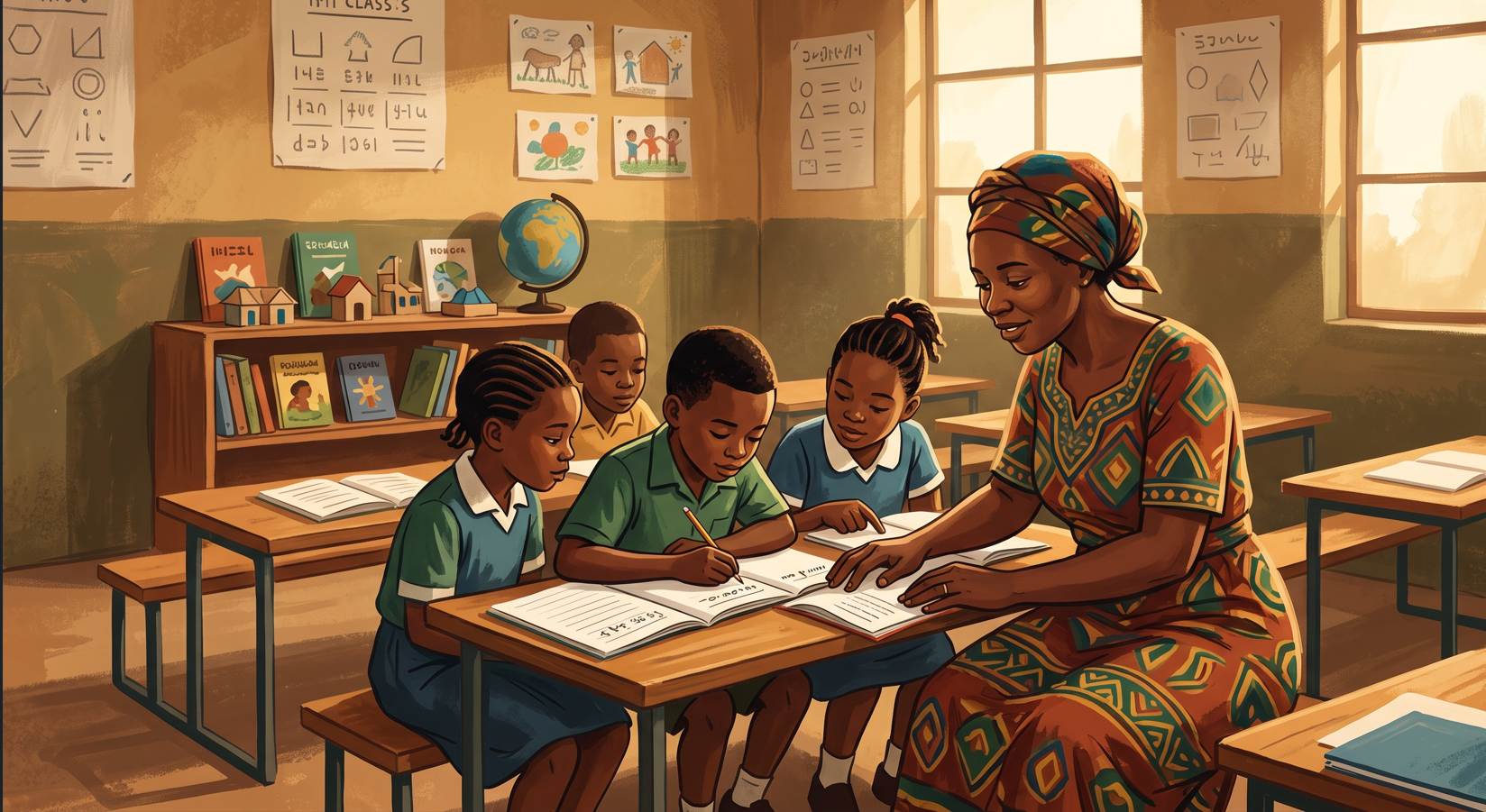
“We speak it, but some of us cannot write it”
One of the most revealing comments came from Enock Baba-Vee Sigauke.
Identifying himself as Ndau, he argued that children should learn the language at school. His explanation went beyond pride: some speakers, he said, struggle to write Ndau because they were never taught how to write it.
That is an important distinction.
Speaking a language at home does not automatically teach a child its written conventions. Conversation does not, by itself, provide textbooks, literature, spelling instruction or the ability to produce formal written work.
A language can remain alive in everyday speech while receiving little space in formal education.
Belle Noir framed support for Ndau as a right to preserve a language. Other contributors expressed a similar desire to see their home language treated seriously.
Those comments do not establish the conditions in every Chipinge school. They do identify a concern worth investigating: what happens when children’s spoken language is familiar at home but marginal in the work they are expected to submit at school?
Recognition without teaching materials can remain largely symbolic.
The Constitution already recognises Ndau
Several commenters insisted that Ndau is simply Shona. Others argued that Shona is an umbrella term encompassing different varieties.
The historical and linguistic relationship is more complicated than a comment-section verdict. Scholarship has examined the competing historical, linguistic and political perspectives rather than treating the classification as uncontested.
For the constitutional discussion, however, there is a clear starting point.
Section 6 of Zimbabwe’s Constitution lists Ndau and Shona separately among the country’s 16 officially recognised languages. It requires equitable treatment of recognised languages and directs the State to promote their use and development.
That does not settle every curriculum question.
It does mean Ndau’s recognition is not something invented by this social-media argument.
Nor does Section 6 designate Shona as Zimbabwe’s sole national language, as some comments appeared to assume.
The constitutional starting point is linguistic plurality. The difficult work is translating that recognition into teachers, books, assessment and genuine access.
Adding Ndau and banning Shona are different policies
Some of the most constructive comments resisted the choice between one language and another.
Brighton Shaya proposed that children learn both Shona and Ndau.
Alfred Chikukwa Dhliwayo Beta asked what would be wrong with having both available.
Tapiwa Kafesu argued against a ban, noting that some Ndau children might want to study Shona and should retain that choice.
These responses offer a different way to frame the problem.
A school can strengthen Ndau without declaring Shona unwelcome. It can recognise a local language while helping children communicate beyond their immediate community.
Supporters of Shona raised concerns about employment, travel, intermarriage and communication in places such as Harare. Those concerns deserve consideration.
But they do not demonstrate that studying Ndau prevents a child from learning another language.
The more useful question is whether the school system can provide both local literacy and wider communication skills.
Mother-tongue education need not become a boundary around a child’s future.
Which children—and which kind of teaching?
The discussion also moved between language as a subject and language as the medium used to teach other subjects.
Those are different decisions.
Studying Ndau grammar and literature is not the same policy as teaching mathematics or science through Ndau. Removing Shona from a timetable is not the same as making Ndau the language of every lesson.
A workable proposal needs to specify which change is intended.
It also needs to account for children whose home language differs from that of the surrounding community.
One commenter asked about teachers’ children. The question points towards a wider issue: families move, communities are mixed, and a district’s dominant language does not necessarily describe every learner.
A policy intended to prevent exclusion should not create a new form of it.
The interests of Ndau-speaking children matter. So do the interests of other children living and attending school alongside them.
Where are the teachers and books?
Some commenters asked whether Ndau textbooks were available. Another asked which colleges trained teachers to teach the language.
These are not reasons to dismiss Ndau.
They are questions that any serious implementation plan must answer.
A school needs more than permission to offer a language. It needs suitable materials, trained teachers, clear assessment arrangements and time within an already crowded timetable.
Likewise, recognising 16 languages does not mean every child must study all 16.
Offering meaningful language options is different from requiring every learner to carry a textbook for every recognised language.
The debate needs fewer imagined extremes and more school-level evidence.
Which languages are currently offered in Chipinge?
Where is Ndau unavailable?
What do parents and learners want?
What training and resources would schools need?
Without those answers, both “ban it” and “everything is already provided” risk becoming slogans.
Roads and hospitals matter. So does education.
Another group of commenters argued that Parliament should focus on roads, medicines, employment and hunger rather than languages.
Their frustration is understandable.
People facing immediate hardship want representatives to address problems they experience every day.
But language and development are not automatically competing concerns.
Whether a child can understand lessons, acquire literacy and see their community represented in education is also a public issue.
That does not give politicians permission to substitute cultural speeches for service delivery.
A credible language proposal should come with practical commitments: resources, teacher preparation, consultation and a clear explanation of what changes for learners.
People should be able to demand functioning hospitals and a fair education system at the same time.
When disagreement becomes ethnic exclusion
Parts of the supplied discussion went beyond criticism of the proposal.
Some comments described Ndau people as foreigners or told them to leave Zimbabwe. Others invoked Gukurahundi or called for violence.
Those are not ordinary disagreements about school subjects.
They turn an education debate into ethnic intimidation.
It is possible to oppose Hlatshwayo’s reported proposal without denying Ndau speakers’ belonging. It is possible to defend Shona without threatening another community.
Equally, defending Ndau does not justify contempt for speakers of other languages.
A discussion about inclusion loses its purpose when participants begin deciding which Zimbabweans should be allowed to belong.
The presence of that rhetoric should be acknowledged—not recycled as entertaining banter.
A language should be a foundation, not a fence
The strongest case for teaching Ndau is not that Shona has no value.
It is that Ndau has value too.
The strongest criticism of the reported ban is not that Ndau speakers should abandon their language.
It is that children should not lose useful learning opportunities when other opportunities can be strengthened.
The answer may require different arrangements at different stages of schooling, informed by local demand, available resources and learners’ needs.
But the goal should be clear.
A child should be able to read and write the language of home while acquiring the languages that open other doors.
That returns us to the short exchange in the comments.
Who will you speak Ndau to?
With me.
There is already someone on the other side of that conversation.
The task of education is to give that conversation a written future—not to make children choose between belonging at home and belonging in the wider country.