I did not know what roll-on was used for until I was in my late twenties.
That sentence complicates the laughter, ridicule or truth as some may say, directed at Zimbabweans after a video about body odour at a Harare gym spread across social media.
The person telling this story was not raised to avoid bathing.
They bathed every day.
I have a scar that I got from my granny. She beat me because I had gone to the well to bath in the dark.
They wore washed and ironed clothes. Clothes washed sometimes with muddy river water or when it rained water fetched from wells. Ironed with a charcoal iron. What they did not have was deodorant – or anyone explaining what it was supposed to do.
After losing both parents, they grew up with sekuru and mbuya in rural Zimbabwe. The household’s priorities were determined by survival.
How would we prioritise deo when I did not have shoes to go to school?” they asked.
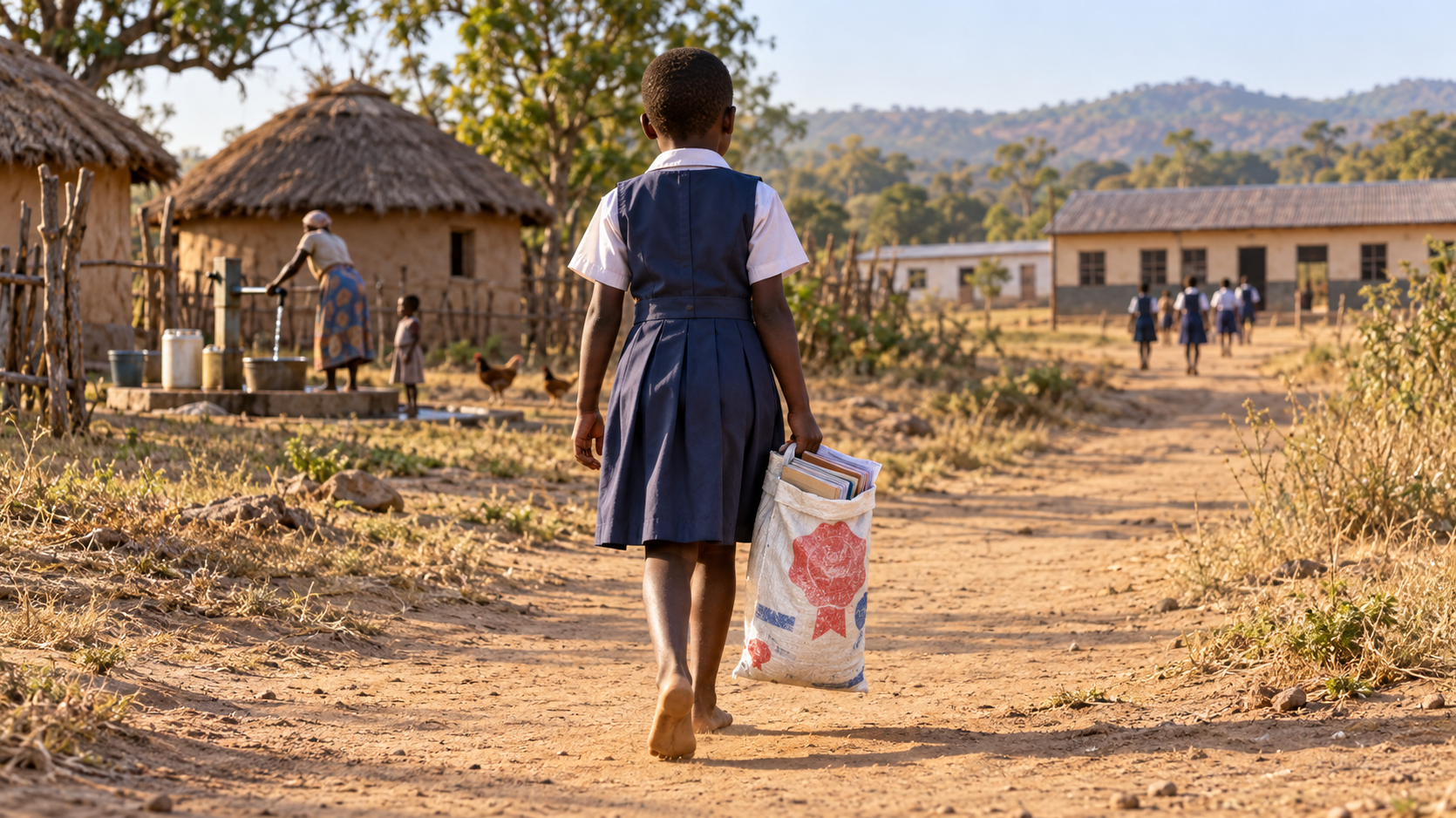
Schoolbooks were carried in an empty 10-kilogram mealie-meal bag. Sometimes bathing soap was unavailable. When that happened, washing soap had to serve the same purpose.
Water did not arrive through a tap inside the house. For the majority in Zimbabwe that is still the case.
Bathing could mean going to a borehole, river or dam. Every bucket used required effort before it could become part of anyone’s hygiene routine.
In that world, words such as “deo” and “perfume” existed—but they belonged somewhere else.
They were not ordinary household products accompanied by instructions. They were vague things associated with people who had more money or lived differently.
The family knew about bathing.
Roll-on was not part of the knowledge passed down.
“We could bath”
That distinction matters.
Online commentary has often treated bathing and deodorant use as interchangeable signs of cleanliness. A person who does not use roll-on is assumed not to wash. A person with body odour is treated as careless.
But this account describes something more complicated.
“We knew we could bath,” the contributor explained. “We all bathed every day and wore washed, ironed clothes.”
The grammar carries the memory of the period: bathing was known, expected and practised.
What was missing was a separate layer of personal-care knowledge—what roll-on was, where it was applied, how it differed from perfume and why it might still be useful after bathing.
When the contributor eventually moved to Gweru, the knowledge gap remained. Their uncles did not discuss deodorant either.
The household products they remember were Geisha bathing soap, Vaseline and Camphor cream at times. These were shared.
There was no individual shelf of specialised products for different parts of the body. There was soap for washing and cream for the skin. Anything beyond that could appear optional, unfamiliar or financially unrealistic.
The contributor does not know whether they smelled while riding kombis to work.
I don’t know whether I smelled or not. Nobody ever told me.
That uncertainty sits at the centre of the story.
How does a person correct something they have never been taught to notice?
A product can be available without belonging to your world
In the online debate, some commenters insisted that roll-on was readily available and inexpensive in Zimbabwe.
That may be true in many shops today. It does not answer this person’s experience.
Availability is not the same as practical access and it does not mean how many know how to use it.
A product may sit on a supermarket shelf while remaining outside a household’s budget, habits and understanding. A child who does not have school shoes is unlikely to demand a specialised product they have never seen used at home.
Even if the grandparents knew about deodorant, it would have competed with food, soap, school costs, clothing and transport.
But in this case, the contributor says the grandparents themselves did not know what roll-on was for.
That was not necessarily neglect. They passed on the knowledge available to them: wash your body, clean your clothes and present yourself properly.
The missing lesson may only become obvious decades later, when that child enters an urban workplace, migrates or encounters people raised with different expectations.
One commenter in the wider Facebook discussion made a similar admission. He said he had not grown up regularly using roll-on and still struggled to finish a multipack bought years earlier.
His comment attracted criticism from people who interpreted it as an embarrassing confession.
It may have been something more useful: evidence that personal-care habits are learned.
Hygiene education is inherited unequally
Children usually do not discover hygiene routines through product labels.
They learn by watching adults.
They see which products their parents buy, where those products are kept and how they are used. They are reminded to brush their teeth, change underwear, wash socks, use roll-on or avoid repeating clothes.
If the adults themselves were never taught a particular practice, the instruction may not reach the next generation.
This is why mockery does little to explain the problem.
The question is not only: “Why doesn’t that person use roll-on?”
It is also:
Who taught them?
Was the product present in their childhood home?
Could the family afford it consistently?
Was water readily available?
Did the household distinguish between bathing soap, perfume, deodorant and antiperspirant?
Could relatives speak honestly about body odour without humiliating one another?
Several commenters beneath the original video said schools once played a larger role in personal-hygiene education. They recalled toothpaste and toothbrush campaigns, health workers and lessons about cleanliness.
Others suggested that hygiene education should return to schools—not as a joke about making roll-on an examination subject, but because not every child receives the same information at home.
That would recognise a basic reality: knowledge that appears obvious in one household may be completely absent in another.
Before roll-on comes water
The contributor’s memory of travelling to a borehole, river or dam should not be treated as a historical curiosity.
UNICEF says access to safe water and sanitation remains a major problem in Zimbabwe, particularly in rural communities. 36% still use basic sanitation services. Its current programmes still include borehole rehabilitation, piped schemes and community water points.
In some communities, a borehole remains the only safe water source. Other pupils and households continue to travel significant distances to collect it.
Those conditions shape hygiene.
“Bath every day” sounds like simple advice when water comes from an indoor tap. It means something different when water must be pumped, carried or collected from a distant source.
None of this means rural Zimbabweans did not value cleanliness. Communities developed routines around the water and products available to them.
But scarcity changes priorities.
If bathing soap is unavailable and laundry soap must be used on the body, the problem is larger than a missing roll-on.
Deodorant sits near the end of a chain:
First there must be water.
Then soap.
Then clean clothes. Some always have to wear the same clothes everyday.
Then knowledge of body odour and the products intended to manage it.
Then enough money to purchase those products consistently.
A public conversation that begins and ends with “tengai roll-on” ignores everything preceding the purchase.
Bathing and roll-on do different jobs
The social-media discussion also exposed confusion about what roll-on can and cannot do.
Deodorant, antiperspirant, perfume and bathing are not interchangeable.
Body odour commonly develops when bacteria on the skin break down components of sweat. Deodorants are intended to manage odour, while antiperspirants reduce sweating. Ordinary washing and clean clothing remain important, and persistent or significantly changed body odour can sometimes require medical advice.
Spraying perfume on a shirt is therefore not necessarily the same as addressing underarm odour.
But using roll-on without washing the body or changing damp clothes is not a complete solution either.
People can also experience irritation from some products. Others may sweat heavily or have persistent odour despite bathing and using deodorant. They should not automatically be treated as dirty.
The practical message is broader than “use roll-on”.
Bathe where possible. Wear clean clothing. Allow gym clothes and shoes to dry properly. Use an appropriate deodorant or antiperspirant if suitable. Speak to a health professional when an odour changes or persists despite ordinary hygiene.
Most importantly, address people with dignity.
Poverty does not smell but it shapes the choices around smell
It would be easy to turn this testimony into another generalisation: rural Zimbabweans were not taught to use deodorant.
The contributor is describing one life, not every rural household.
Other Zimbabwean families used roll-on. Some parents taught detailed hygiene routines. Some people without much money still prioritised deodorant, while some wealthy people did not.
Class alone does not determine personal hygiene.
Yet deprivation clearly shaped this particular person’s childhood.
A child without shoes, using a mealie-meal bag for books, is not making a consumer choice between brands of deodorant. The household is deciding which necessities cannot be postponed.
Roll-on was not refused after careful consideration.
It never entered the decision.
That is the difference between saying “people cannot afford deodorant” and understanding what poverty does to the boundaries of the imaginable.
When daily life is organised around food, school access, water and basic soap, a product can remain unknown even when advertisements mention it.
What happened in the move to town?
The contributor’s move to Gweru did not immediately close the gap.
Urban life brought kombis, workplaces and closer contact with strangers. It did not automatically provide the private conversation that should accompany those changes.
The uncles never raised the subject.
Perhaps they also did not know. Perhaps they used other routines. Perhaps the family assumed that bathing and washed clothing were sufficient.
This is how a childhood knowledge gap follows someone into adulthood.
By the time another person reacts to the smell, the issue may be interpreted as stubbornness. The person being judged may not understand what they are doing differently.
The absence of feedback also matters.
Zimbabwean families can be direct about many things but strangely indirect about smell. People may complain after somebody leaves, open a kombi window or make jokes online rather than speak privately and kindly to the person concerned.
Nobody wants to be the one to say, “Mukoma, pane zvandiri kuda kukuudzai.”
Yet silence protects embarrassment only temporarily. The person continues without the information needed to make a change.
The stranger who mocks you does not know what you survived
The South African reactions to Furk’s video treated body odour as evidence about Zimbabweans.
Some commenters claimed Zimbabweans and roll-on were “sworn enemies”. Others said the alleged smell was cultural or even “in their DNA”.
The contributor’s story dismantles that idea.
There was nothing genetic about not using roll-on.
There was an orphaned child.
There were grandparents doing what they could.
There were no school shoes.
There was a mealie-meal bag carrying books.
There was sometimes no bathing soap.
There was water that had to be collected away from home.
And there was a product nobody in the household understood.
Reducing all of that to “Zimbabweans do not bathe” is not analysis. It is prejudice made comfortable through humour.
The testimony does not deny that body odour can inconvenience other people. Nor does it argue that an adult who later learns about hygiene expectations has no responsibility to adjust.
It asks for context before condemnation.
People can learn new habits. They are more likely to learn through information and respectful correction than through national humiliation.
“ My girlfriend introduced me to roll-on and I used to sometimes left home without putting it on.…until I changed the arrangement. Roll-on bottle in front of the skin moisturiser”
The conversation we should have
The useful question is not whether Zimbabweans smell.
It is why people raised in the same country can enter adulthood with profoundly different knowledge about their bodies.
One child grows up with personal soap, toothpaste, roll-on and a parent who explains each item. Another shares soap and cream with an extended family. Another collects water before school. Another reaches adulthood without knowing that deodorant is applied directly to the underarms rather than sprayed on clothing.
They may later meet in the same kombi, office, mine, church or gym.
The differences between them are not proof that one is naturally clean and the other naturally dirty. They are evidence of unequal access to water, products, information and private guidance.
Zimbabwe can have an honest conversation about hygiene without turning poverty into a joke.
Teach children how to wash properly and care for their clothes. Explain body changes during puberty. Teach the difference between soap, deodorant, antiperspirant and perfume. Make basic hygiene products affordable and available. Give adults a dignified way to learn what they missed.
And when someone does not know, tell them without treating their ignorance as a national defect.
The contributor eventually learned what roll-on was for.
The lesson arrived late, but it arrived.
The more difficult lesson belongs to the rest of us:
Before laughing at what somebody does not know, ask what their childhood allowed them to learn.