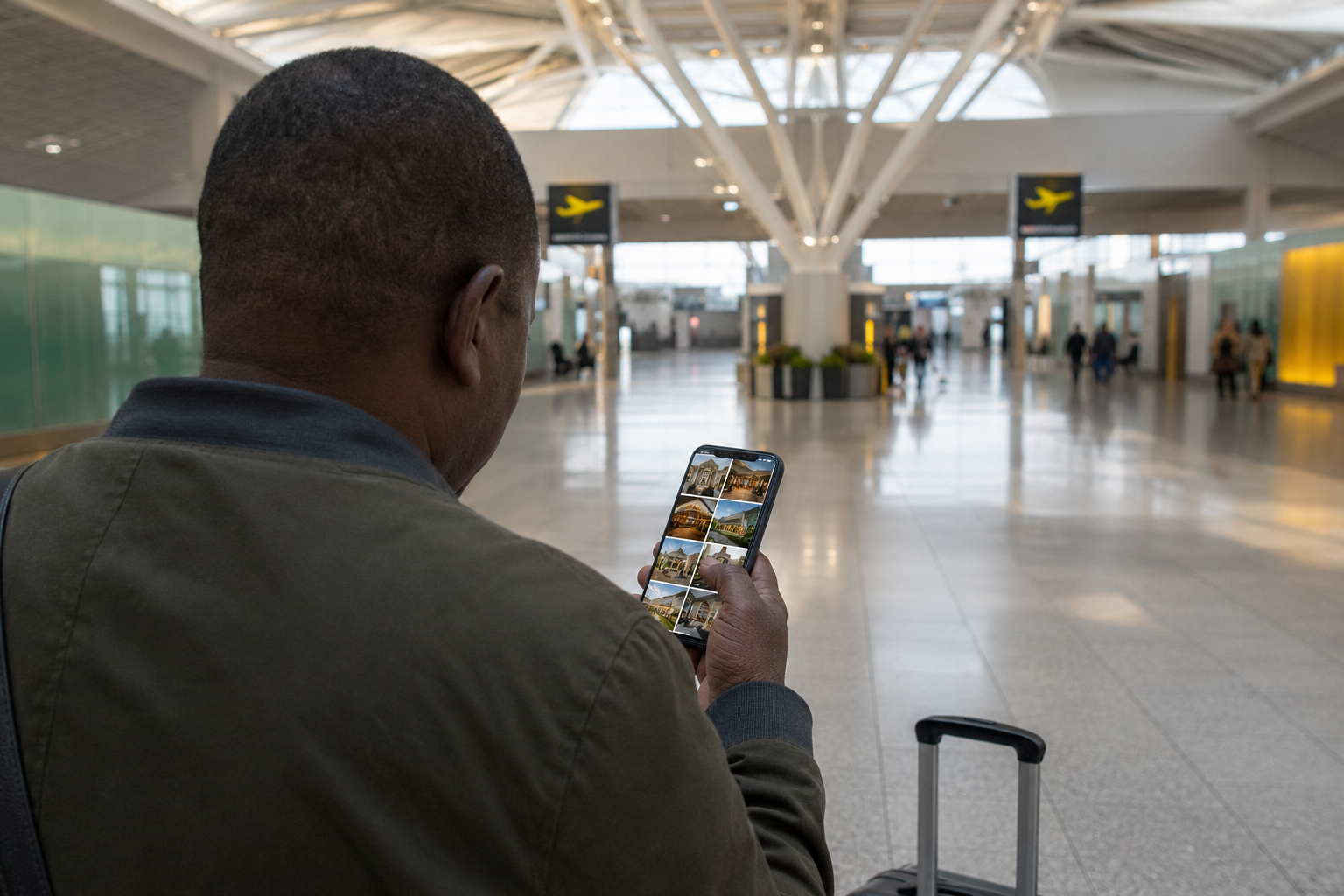
After 20 years in New Zealand and only one visit to Zimbabwe since leaving, a Zimbabwean asked a deceptively simple question on Facebook: is it true that things are now good back home?
The last visit was in 2012. Zimbabwe looked difficult then. But more recent social-media posts appeared to tell another story—investors arriving, people enjoying themselves and claims that the country was beginning to resemble the Zimbabwe of the 1990s.
The possibility was attractive enough to raise a life-changing question: should they relocate?
“What’s the truth, guys?” the poster asked.
The responses offered almost every answer except a simple one.
Some said conditions had improved. Others said social media was lying. Several advised an extended visit before making any decision. A few joked that Zimbabwe was now doing so well that the people sharing those reports must be trying to attract Zimbabweans abroad back home so they could take their places in New Zealand.
Underneath the humour was a serious warning: the Zimbabwe people display online and the Zimbabwe people must navigate every day are not always the same country.
Social media shows what can be built, not what it takes to live there
There is no reason to assume that every picture of a new house, restaurant, shopping centre or successful business in Zimbabwe is false.
People are building. Some businesses are growing. Some families are enjoying comfortable lives. Diaspora money has helped create homes, farms, solar-powered properties and small enterprises. There are Zimbabweans who have returned and found opportunities that would have been difficult to pursue abroad.
But social media does not provide a representative national survey.
It shows the wedding, not the loan. It shows the finished house, not the years of remittances. It shows the restaurant table, not the household budget. It shows someone’s new business without revealing whether the owner has family connections, offshore income, privileged access to contracts or capital accumulated during years abroad.
One commenter described this as Zimbabwe’s “bond paper disease”: someone sees a project that appears successful and rushes to photocopy it without studying the conditions that made the original work.
A thriving lodge, farm, shop or transport business does not prove that the same model will work for the next returnee. It proves only that it worked—or appears to be working—for that particular person.
The image may be real. The conclusion drawn from it may still be wrong.
Zimbabwe works differently when you arrive prepared
The most useful comments did not reduce Zimbabwe to either paradise or disaster. They said the experience depends heavily on what a person returns with.
Do they already own a house, or will they need to rent?
Will they earn locally, or continue receiving income from abroad?
Do they have solar power, a borehole, medical cover, reliable transport and savings?
Are they returning to look for employment, or bringing a business, profession or investment with them?
Do they understand how services, permits, suppliers and institutions currently operate—or are they returning to the country they remember from two decades ago?
One commenter put it plainly: Zimbabwe can be comfortable when a person has money and the right arrangements in place. But someone arriving from the diaspora should also expect poor services, slower systems and transactions that may not work as easily as they do in New Zealand.
Another argued that international exposure and useful skills can help a returnee survive, but “streetwise application” is also necessary.
That distinction matters.
A person may be highly competent in Auckland and still struggle in Harare if their experience depends on predictable systems, clear rules and functioning services. Conversely, someone who understands Zimbabwe’s informal networks, pricing arrangements and workarounds may operate successfully in conditions that frustrate a newcomer.
The returning Zimbabwean therefore faces a strange disadvantage: they are going home, but they may no longer know how home works.
Twenty years can turn home into an idea
The poster left Zimbabwe roughly two decades ago and had returned only once, in 2012. That means the decision is not merely about relocating from New Zealand to Zimbabwe. It is about returning to a place largely preserved in memory.
But countries change, and so do migrants.
The Zimbabwe they miss may contain family, language, weather, food, space and the ease of being among people who do not ask where they come from. It may also contain a younger version of themselves, before migration introduced different expectations of public services, employment, privacy and personal independence.
Meanwhile, Zimbabwe has continued without them.
Some relatives have died. Friendships have changed. Cities have expanded. Institutions have weakened or adapted. New social classes have emerged, often shaped by diaspora money, political access, mining, informal trade and property.
A returnee may arrive expecting recognition and instead discover that belonging culturally is not the same as functioning economically.
That does not mean the desire to return is foolish. It means nostalgia cannot perform the work of research.
Who gives an unbiased answer?
One commenter made an especially useful observation: asking a New Zealand migration group may produce negatively biased answers because many members joined precisely because they wanted to leave Zimbabwe.
The reasons that pushed them out—employment, public services, political uncertainty or economic instability—will shape the advice they give.
But asking a “returning to Zimbabwe” group may produce the opposite distortion. Such communities can attract people already invested in the idea that coming home is desirable. Returnees who have succeeded may post more confidently than those who quietly abandoned the attempt.
Even people physically living in Zimbabwe experience different realities.
A professional earning foreign currency from home, a pensioner receiving money from children abroad, a street vendor, a civil servant and a politically connected contractor can all truthfully describe the same country in completely different ways.
One commenter said Zimbabwe is working “for a few” while the majority suffer. Another said things are not completely good but are better than before. Others insisted that conditions were worsening and that social media was creating propaganda.
These positions may sound contradictory, but they can all emerge from genuine experience.
The problem is asking, “Is Zimbabwe good now?” as though there is one Zimbabwe shared equally by everybody.
A better question is: would Zimbabwe work for this particular person, with their income, assets, dependants, skills, health needs and expectations?
Visit before converting hope into a relocation
Across the disagreement, one recommendation appeared repeatedly: visit first.
Not a two-week holiday spent moving between relatives, restaurants and carefully planned outings. A meaningful trial should reproduce ordinary life.
Rent or stay independently. Shop for groceries. Use the roads during working hours. Visit a public and private medical facility. Investigate electricity, water and internet reliability in the intended area. Speak to people doing the kind of work or business being considered. Calculate costs without assuming that everything will be cheap simply because it is Zimbabwe.
If possible, the person should test an income model before surrendering their New Zealand base. Can their work continue remotely? Can they start the business gradually? Could they spend several months in Zimbabwe while preserving the right and practical ability to return?
A reversible experiment will reveal more than hundreds of Facebook comments.
The trial may confirm that Zimbabwe offers the life they now want: family proximity, space, cultural familiarity, business opportunity and freedom from the loneliness or pressure of diaspora life.
It may instead reveal that what looked attractive online depended on foreign income, private infrastructure and personal networks the prospective returnee does not yet have.
Or it may produce a middle path—living between both countries rather than forcing an immediate, permanent choice.
Do not return to a timeline
The comments were harsh at times, but their strongest message was sensible: do not relocate because Facebook says Zimbabwe is booming, and do not remain abroad merely because other migrants insist nothing can ever improve.
Both positions outsource a personal decision to somebody else’s circumstances.
Zimbabwe may offer real opportunities. It may also demand that individuals privately provide services that people in New Zealand expect from functioning systems. A returnee with a paid-off home, foreign-currency income, solar power, water, medical cover and a strong network may experience the country very differently from someone arriving to seek an ordinary salary.
That is not necessarily evidence that one side is lying. It is evidence that comfort and national recovery are not the same thing.
A person can build a very good life inside a struggling country. A few good lives do not prove that the country is working for everyone.
After 20 years away, the question is therefore not simply whether Zimbabwe has changed for the better.
It is whether the person considering the move has enough current knowledge—and the right foundations—to build a life there without depending on the Zimbabwe social media chose to show them.