How much does a passport cost for a 14-year-old, and can the child obtain it if a parent is not there?
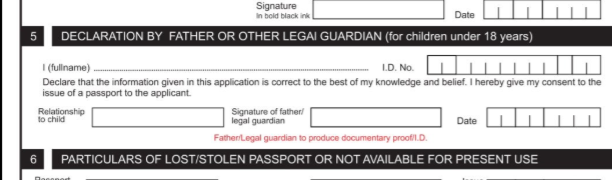
For a child living in Zimbabwe whose parent or legal guardian is abroad, official mission guidance provides a route: the parent or guardian can arrange a Section 5 declaration through a Zimbabwean Embassy or Consulate. The parent does not necessarily have to return to Zimbabwe simply to give consent.
That is the question in a screenshot supplied to Tandara from a Zimbabwean documentation-assistance Facebook group. The anonymous poster asks briefly and thanks anyone who can help.
The replies arrive with confidence. One parent must be present, some say. Others say a parent abroad can complete paperwork at a Zimbabwean mission and send it home. Several repeat a US$170 fee. A discussion about passport validity produces different age thresholds.
The original post does not establish where the child or parent is, which office would handle the application or whether this is a first passport or a renewal. Those details matter. Yet the supplied discussion captures a recognisable difficulty of life across borders: earning and caring from one country while trying to complete a child’s paperwork in another.
Family help and formal authority
Several respondents describe relatives helping children through the process. One says a sister assisted; another says a grandmother was named in the paperwork.
These accounts offer something valuable: examples of families finding a way forward. They also challenge the assumption that a parent must necessarily travel home for every administrative task.
But a successful experience is not a universal checklist. The relevant question is what the parent authorised, what documents were supplied and which process the family followed.
The Zimbabwean Consulate in Johannesburg’s published requirements say that, for applicants under 18, a father, mother or legal guardian must sign Section 5 of the passport application form. They also require the signatory’s identity document or valid passport and specify documentary requirements for legal guardianship.
Zimbabwe’s embassy in London separately describes a Section 5 declaration for a parent or legal guardian applying in relation to a minor living in Zimbabwe.
The practical sequence is to visit the relevant Zimbabwean mission, complete the consent or declaration with the parent’s or legal guardian’s identification, and arrange for the endorsed original paperwork to reach the representative assisting in Zimbabwe. The representative then helps complete the application through the passport office, with the child’s required documents and attendance as that office requires. Obtain the mission’s current checklist before the visit and confirm submission arrangements with the receiving office.
The parent giving consent and the representative helping in Zimbabwe have different roles. A representative does not become the child’s legal guardian merely by carrying the paperwork.
Those official provisions explain why the phrase keeps appearing in the replies. Section 5 is about formal consent; it is not simply a promise that any adult can take any child to obtain a passport.
There is also a difference between someone helping with an application and someone having legal authority to consent. A grandmother may provide daily care, but the documentation required for a particular application still needs to be established. Sharing the child’s surname is not, by itself, proof of guardianship.
The price is not always the whole cost
The repeated US$170 answer sounds reassuringly clear.
The London embassy’s published page does list US$170 for ordinary passport processing in Zimbabwe, while warning that fees and processing times can change. But that is not necessarily the entire cost of a family’s route through the process.
For example, Johannesburg’s published fee schedule separately lists a R150 charge for Section 5. That distinction matters: a passport-processing fee and a consular service charge are different items, and the services a family needs may differ.
It also makes the vague claims about extra money in the replies less useful than they first appear. Other commenters dispute those claims, saying they followed an authorised process without the additional spending being suggested.
The supplied discussion does not establish that any improper payment was requested or made. Nor does it establish that every cost beyond the passport fee would be improper.
A useful answer should identify the service, the official charge and the receipt, rather than leave a parent wondering what an unexplained amount is supposed to buy.
Some families need more than a standard answer
One respondent raises a more difficult situation: a child living with a grandmother after one parent’s death, with the surviving parent’s whereabouts unknown.
That question cannot responsibly be settled by a stranger’s assurance about surnames or by telling the family to prepare more money. It raises issues of consent, guardianship and the documents needed to establish authority.
The thread also asks whether an older teenager with an identity document can apply alone. Others disagree about whether a child’s passport lasts five or ten years and at what age the period changes.
Those validity thresholds were not established by the official material checked for this article. Repeating the most confident reply would not resolve the uncertainty.
The better next step is a specific enquiry to the relevant mission and passport office, explaining the child’s age, location, available documents and family circumstances without posting sensitive details publicly.
Community knowledge needs a date and a boundary
There is generosity in the supplied replies. People explain terms, share what worked and correct information they believe is wrong. For a parent trying to coordinate documents, travel and another adult’s time, that experience can be a useful starting point.
It becomes more useful when the account includes when and where it happened, the exact documents used and a distinction between an official requirement and someone’s recollection.
There are also questions a group should not expect a parent to answer in public. Birth certificates, identity numbers, custody documents and a child’s personal circumstances are not evidence to upload simply to satisfy strangers.
Child in Zimbabwe, parent abroad: the Section 5 consent route
The original question sounds small: the price of a passport and whether a parent must be there. Behind it may be a much larger task of coordinating care across borders.
How can community advice help families complete that task without making a child’s next step depend on which confident answer they happen to believe?