“Chirere chigo kurerawo” is a scam.
With that declaration, businessman Tinashe Mutarisi stepped directly into one of Zimbabwean family life’s most sensitive conversations. The familiar expression encourages a person to raise a child who may one day care for them in return.
Mutarisi rejected that expectation.
“I chose to have kids,” he wrote, arguing that his responsibility was to raise and prepare them for a good life without expecting returns. Planning to be supported by them in old age was, in his view, misplaced.
If his children later chose to help, that would be welcome. But their first responsibility as adults should be to build their own lives and care for their own children.
Mutarisi anticipated two common responses.
The first was that his position was possible only because he had money.
The second was that wealth had made him disrespectful.
He dismissed both as invalid.
Within six hours, the post had attracted approximately 10,000 reactions and 1,600 comments.
Some readers applauded him for saying what many younger parents privately believe: children did not ask to be born and should not enter adulthood already owing their parents a debt.
Others accused him of misunderstanding the proverb, speaking from privilege and importing an individualistic outlook into a culture built around reciprocal care.
The disagreement was not really about one Shona proverb.
It was about who must carry the cost of ageing when parents can no longer work.
What does “kurerawo” actually mean?
Many commenters said Mutarisi had interpreted the proverb too narrowly.
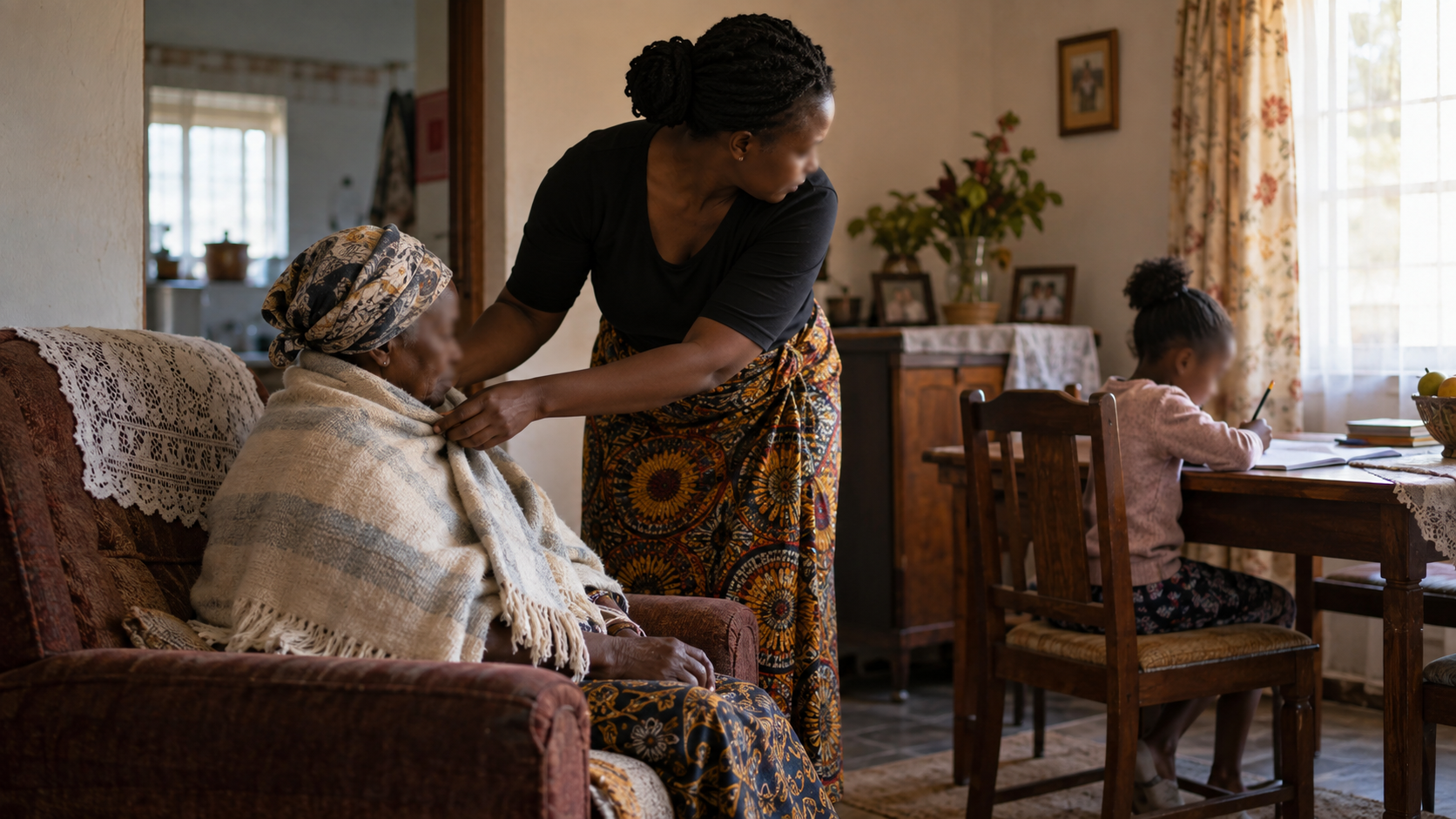
To them, kurerawo did not primarily mean money; It meant accompanying an elderly parent to hospital, preparing food when they could no longer cook, helping them walk, wash or use the toilet.
It meant managing medication when memory began to fail, it also meant visiting regularly, bringing grandchildren and providing the comfort of familiar people near the end of life.
A parent may have money, a house and paid caregivers but still need the presence of their children.
As one contributor argued, money can purchase care, but it cannot entirely replace the warmth of family.
This interpretation changes the proverb considerably.
“Chirere chigokurerawo” then becomes less of a financial contract and more of a cycle of human dependency. Parents care for children when they cannot care for themselves. Decades later, the direction of that care may reverse.
Mutarisi’s clarification showed that he was challenging this expectation too.
He said parents should plan for the possibility that they may eventually need intimate assistance rather than assuming a child will sacrifice their prime working years to provide it.
If an adult child invites a parent to spend time with the grandchildren, he said, the parent can appreciate the invitation. But the child should not be emotionally compelled to abandon work, family and personal plans in order to remain permanently available.
That position made the debate more difficult.
It is relatively easy to agree that children should not be treated as cash machines. It is harder to decide who should help an ageing parent use the bathroom.
A child is not an investment
Mutarisi’s central argument was that choosing to become a parent creates a one-way responsibility.
The adult decided to bring the child into the world. The child did not apply to be born.
Food, shelter, education and care are therefore parental duties, not instalments in an investment that matures when the child begins earning.
Several commenters agreed.
They wanted to educate their children, help them become independent and, where possible, leave them property, businesses or other forms of inheritance.
If the children later bought them gifts or provided support, it would be received as love – not collected as a debt.
This distinction matters because parental sacrifice can be turned into an account that never closes.
“I paid your school fees.”
“I sold cattle to send you to university.”
“I suffered because of you.”
“You are successful because of me.”
Each statement may be true.
But when repeated during every financial disagreement, the history of care becomes a permanent invoice.
The child’s adult income is then treated as family property before they have paid their own rent, raised their children, built savings or prepared for retirement.
The result is not simply black tax.
It is a system in which each generation spends its productive years repairing the previous generation’s insecurity and reaches old age expecting the next generation to do the same.
“You are speaking from privilege”
The strongest criticism was that Mutarisi’s proposal assumes parents have meaningful choices.
A wealthy parent can invest, own property, purchase insurance, build a business and employ caregivers later in life.
A market trader, subsistence farmer or low-paid worker may spend everything on immediate survival.
Some parents sold cattle to pay school fees. Some widows raised several children without pensions, stable employment or meaningful help from relatives. Others abandoned their own education or business plans so one child could reach university.
They were not choosing between retirement savings and luxuries. They were choosing between saving for old age and feeding or educating the children in front of them.
One widow responded emotionally that she had raised three children alone under harsh economic conditions and without a pension or family assistance. Two were now professionals and another remained at school. To tell such a parent that expecting help was a scam felt less like financial wisdom and more like an accusation of failure.
Other commenters pointed to economic instability.
A parent may have planned carefully and still watched savings lose value, a pension become inadequate, cattle die, a business collapse or illness consume accumulated assets.
“Plan for retirement” is sound advice. It is not a guarantee.
The debate therefore cannot divide parents neatly into responsible planners and irresponsible dependents. Some people fail to prepare. Others prepare and are defeated by circumstances.
Sacrifice does not always create entitlement
Parental sacrifice is real, but it creates a difficult moral question.
If a mother went without food so her child could eat, does the successful adult child owe her material support?
Many commenters answered yes without hesitation.
They did not describe the support as black tax. They saw it as gratitude.They remembered mothers selling vegetables, fathers disposing of livestock and grandparents taking over the care of children abandoned or orphaned.
Helping such people in old age felt voluntary in emotion but compulsory in conscience.
There is an important difference, however, between a child choosing to honour sacrifice and a parent using sacrifice to control the child.
Gratitude says:
“I saw what you did for me, and I want to make your life easier.”
Entitlement says:
“I raised you, so whatever I demand is now your responsibility.”
The financial transaction may look identical. The emotional relationship is not. In one, support is given from affection and recognition. In the other, it is extracted through guilt, comparison and fear of being labelled an ungrateful child.
Mutarisi objected particularly to comparisons between siblings or other families.
“Uyu akatengera baba vake mota, ko iwe how far?”
That question does more than request help. It turns parental care into a public competition.
A child’s love is judged through vehicles, houses, groceries and the amount transferred each month.
The person may already be assisting with medication, food or rent, yet still be made to feel inadequate because somebody else’s child did more visibly.
The proverb was also an old-age system
The discussion revealed something larger than family expectations.
“Chirere chigokurerawo” operates as a form of informal social protection.
In communities without reliable pensions, affordable residential care, accessible home nursing or state-funded support, children become the retirement plan because few alternatives exist.
The proverb did not emerge from a spreadsheet.
It emerged from a way of life in which generations remained physically close, families worked together and care was exchanged within the household.
An ageing person might not have required a large bank balance if children and grandchildren lived nearby, cultivated the family land and shared food and labour.
Modern life has weakened that arrangement.
Children move to Harare, Johannesburg, London, Perth or Toronto. Women who traditionally performed much unpaid elder care now also work outside the home. Adult children may be raising families while paying mortgages and supporting relatives across borders.
The expectation remains, but the household that once made it possible has changed.
A son in Britain may be able to send money but cannot physically accompany his mother to every clinic appointment.
A daughter in Australia may want her father to live with her but face visa restrictions, housing limitations and work demands.
The proverb survived migration.
The care system beneath it did not always survive with it.
Paid care does not remove family responsibility
Some supporters of Mutarisi argued that adequate retirement savings would allow elderly parents to employ carers rather than depending on children.
That solves part of the problem.
A paid caregiver can prepare meals, assist with bathing, monitor medication and provide companionship. Professional care may also be safer than expecting an untrained relative to manage complex needs.
But paid care still requires oversight.
Who chooses the caregiver?
Who notices neglect?
Who makes decisions if the parent loses capacity?
Who ensures that savings are not being misused?
Who visits simply because the elderly person is loved?
Even a financially independent parent may need a trustworthy person to advocate for them.
The realistic goal may therefore not be complete independence from children. Human beings remain interdependent at every income level.
The goal is to prevent care from becoming an unplanned burden that consumes the child’s household.
Parents can prepare financially and legally for old age while raising children who understand compassion, family involvement and responsibility.
Those ideas do not have to compete.
The sandwich generation is being squeezed
Many adults are already caring in two directions.
They support ageing parents while raising children of their own.
Their income must serve the past, present and future simultaneously.
Money goes towards a parent’s medication, a child’s school fees, today’s household expenses and the retirement savings meant to prevent the cycle from repeating.
When the income is limited, one of those responsibilities is postponed.
Usually it is the least urgent one: retirement.
This is how the proverb reproduces itself.
A parent spends everything raising children and supporting their own parents. By the time the children become independent, the parent has little time or money left to prepare for old age.
They then depend on the same children they had hoped to release.
Nobody necessarily planned to create the cycle. Each generation responded to the most urgent need in front of it.
Breaking it requires more than telling parents to save.
It requires sufficient and stable income, realistic family size, accessible financial products, healthcare planning and honest conversations before old age arrives.
It may also require accepting that the transition will take more than one generation.
Today’s adult may still need to support a parent who has nothing while building a different arrangement for their own children.
That is unfair.
It may also be unavoidable.
Does the child owe the parent?
The comment thread repeatedly tried to produce one rule for every family.
There may not be one.
A parent who deliberately neglected a child cannot claim the same moral position as the grandmother who rescued and raised that child.
A wealthy parent demanding luxury purchases presents a different case from a pensioner needing blood-pressure medication.
An adult child who is financially secure faces a different decision from one barely paying rent and feeding their own children.
Care also depends on the relationship that existed before money became involved.
Some parents raised children with affection and dignity.
Others provided materially but remained abusive, controlling or absent.
The biological title alone cannot explain every obligation.
What can be stated more confidently is that children should not be conceived as retirement products.
Having more children does not guarantee more care. A child may experience disability, unemployment, illness, migration difficulties or family obligations of their own.
The parent who expects repayment is gambling on a future neither side controls.
At the same time, an adult child should not use the language of independence to erase genuine sacrifice or watch a loving parent suffer when assistance is possible.
Freedom from entitlement does not require freedom from compassion.
From repayment to a cycle of care
One commenter offered a useful reformulation.
“Chirere chigokurerawo” should represent a cycle of care, not a cycle of financial obligation.
That preserves what is valuable in the proverb.
Children learn that families do not abandon vulnerable people. Parents learn that care given today can shape the compassion children show later.
But the child is not handed an unlimited invoice.
Under this interpretation, parents still have a responsibility to plan.
They should not make educational choices they cannot afford solely because they expect the child’s future salary to repay them. They should build savings, assets, insurance or income where circumstances permit. They should discuss preferences for housing, medical decisions and care before a crisis.
Children also have responsibilities.
They should remain present, ask what parents need and contribute according to capacity. If one sibling cannot give money, they may provide time. Another may handle medical appointments. Another may assist with housing or food.
The burden should not automatically fall on the child perceived to earn the most.
Care can be shared without becoming a debt.
The generation trying to change the ending
Mutarisi’s post resonated because many current parents are attempting two contradictory tasks.
They are caring for parents who depend on them while trying to ensure their own children will not face the same responsibility.
They may resent the pressure placed on them but still love the people applying it.
They may call black tax destructive and send the money anyway.
They may believe children should inherit from parents while knowing they inherited almost nothing themselves.
This generation cannot rewrite how its parents reached old age.
It can decide what expectations it passes forward.
That may mean accepting help from adult children without treating it as a right.
It may mean acknowledging parental sacrifice without allowing gratitude to destroy a young household.
It may mean using money for caregivers while recognising that emotional presence cannot be outsourced entirely.
And it may mean admitting that even the best retirement plan cannot guarantee complete independence.
“Chirere chigokurerawo” does not have to be discarded.
But it may need to lose its debt-collection meaning.
Parents can raise children to fly without expecting them to circle the family home forever.
Children can build their own lives without pretending they owe nothing to the people who carried them.
The question is not whether families should care for one another.
It is whether care will be given through love, shared according to capacity and supported by planning—or demanded as the repayment of a loan the child never agreed to take.