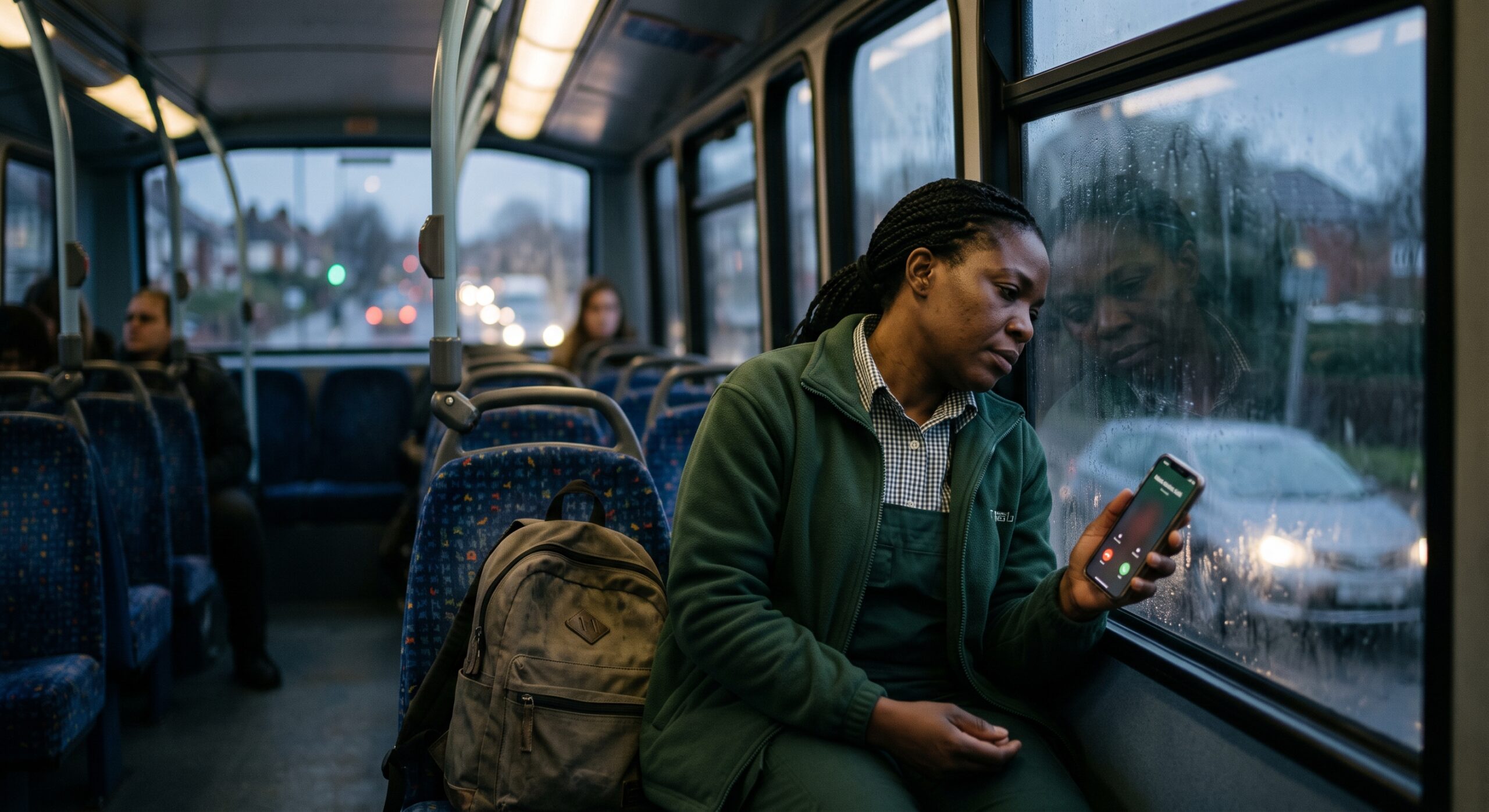
“What is one thing that’s silently breaking you, but you have to pretend you’re fine every day?”
The question appeared in a Facebook group for Zimbabweans in the United Kingdom.
There was no detailed story attached to it. No named crisis. Just a sentence on a soft-coloured background and a broken-heart emoji.
Within four hours, it had attracted approximately 179 comments.
The answers did not describe one shared problem. They opened windows into many private lives.
“Not living with my kids.”
“Bills.”
“Marriage.”
“Waiting for my child’s visa.”
“Shared accommodation. I would love my own space, but marentals.”
“Doing life alone.”
“Not having friends to hang out with.”
One person said they had lost their job two months earlier and were hungry. The previous day, they had eaten only potatoes.
Another was waiting for a dependant to join them and feared coming immigration changes.
A parent worried about who would care for their disabled child after they died.
A single person said life in Britain felt designed for two incomes. Repeatedly having to say they were unmarried had begun to make them feel inadequate.
Separately, a woman described divorcing the father of her children because, according to her account, his alcohol use had made family life intolerable. She was now raising their planned children largely alone, struggling financially and carrying resentment towards a man she said neither supported nor visited them.
The discussion became a crowded waiting room of people who looked functional from the outside but were privately waiting for something to change.
A visa.
A job.
A spouse.
A reunion.
An apology.
Enough money.
A reason to believe that tomorrow would feel lighter.
The diaspora success story has a backstage
Zimbabweans often see migration through its visible results.
There is the airport photograph. The first winter coat. The new car. Graduation. A better job. A neat home. Groceries sent to family. Money for school fees. Photographs taken in London, Birmingham or Manchester.
Those images are not necessarily false.
They are simply incomplete.
Behind them may be a parent going to work after crying about a child left in Zimbabwe. A care worker comforting other families while unable to bring their own dependant to Britain. A professional earning pounds but sharing a crowded house because rent absorbs too much of the income.
The person who appears established may be one unexpected bill away from crisis.
The one sending money home may be eating the cheapest available meal.
The person who posts encouragement every morning may be struggling to convince themselves to continue.
Diaspora life can improve financial opportunity while creating other forms of poverty: too little time, too little privacy, too little companionship and too little physical contact with the people for whom the sacrifice was supposedly made.
That contradiction appeared throughout the comments.
People had crossed borders to create better lives for their families. The same migration process had separated some of them from those families.
“Not living with my kids”
The most repeated pain was separation from children.
Several parents said they were waiting for a child’s visa or trying everything possible to arrange a reunion. One explained that their immigration status did not permit them to bring family members. Another said being apart from their child prevented them from sleeping.
These were short comments, but the brevity made them heavier.
“Not living with my kids.”
No explanation followed because, for the parent, the sentence already contained the whole wound.
Diaspora parenting often happens through screens and transactions. A parent calls, checks schoolwork, pays fees, sends clothes and tries to remain emotionally present across countries and time zones.
But money cannot attend a school meeting.
A video call cannot provide a hug.
A parcel cannot notice the small changes in a child’s behaviour that someone living in the same home might see.
The parent may be sacrificing daily closeness to secure the child’s future. The child may understand that sacrifice and still experience the parent’s absence as abandonment.
Both realities can exist together.
The comments did not establish why each family was separated or whether reunion was legally possible. They did reveal how easily immigration language—dependants, eligibility, applications and processing—can conceal an intensely human experience.
A “dependant” is someone’s child waiting for a parent.
When marriage is the hidden wound
Marriage appeared in the discussion in contradictory ways.
Some people were silently breaking because they were married.
Others were hurting because they were not.
One commenter wrote only: “Marriage and not having friends to hang out with.”
Another said Britain was “a two-person lifestyle” and that being unmarried left them feeling financially and emotionally inadequate.
Together, the comments challenged the idea that marriage automatically protects people from loneliness.
A person can be alone because nobody comes home to them. Another can share a home and still have nobody with whom they feel safe enough to speak.
The woman who described leaving a husband affected by alcohol initially received a response questioning what she had expected after divorce. The commenter asked whether the man had otherwise cared for the family and suggested that perhaps life’s pressures had caused his drinking.
The implication was familiar: had she tried hard enough to save him?
Her later response revealed what “he only drinks” had concealed. According to her account, he became abusive when intoxicated, regularly passed out, wet their bed, disrupted family life and subjected her and the children to distressing episodes in the home.
She said she had stayed for too long, tried to help him and eventually left when the situation began seriously damaging her wellbeing.
The exchange demonstrated how quickly society can ask a woman to defend leaving before asking what staying required from her.
Alcohol dependence may be an illness, and people suffering from it need support. That does not require a spouse or children to remain indefinitely inside frightening or abusive behaviour.
Compassion for the person with an addiction should not erase the people living with its consequences.
“I slept with potatoes”
Among the stories of emotional pain was one immediate material crisis.
A commenter said they had lost their job two months earlier, had no food and had gone to sleep after eating potatoes. They asked whether anyone could help them buy something to eat.
One response offered prayer. Another asked where the person was located. Someone else suggested a food bank.
The exchange captured both the possibility and the limitation of online community.
A public group can provide visibility, information and perhaps emergency assistance. It can also expose a vulnerable person to ridicule, disbelief or predatory private messages.
One man had already responded to a distressed single mother by inviting her to send him her email because he could “take her mind off things.”
Perhaps he intended kindness. In that context, however, the approach also showed how quickly someone’s vulnerability can be treated as an opening.
When people disclose hunger, abuse, depression or loneliness, the first responsibility of a community should be safety—not romance, interrogation or judgment.
The pain of having living family you cannot reach
One contributor described a different type of bereavement: being cut off from a living parent.
According to her account, family conflict began after she travelled to Zimbabwe and questioned information she had received concerning her mother’s health. She said she had since been prevented from communicating with her mother through WhatsApp and could no longer exchange the videos and voice messages that had previously connected them.
Her own health and unemployment had made regular international calls difficult.
“People see the posts, but they don’t see the tears behind them,” she wrote.
Her account cannot be independently verified, and the relatives involved have not given their version. But the pain she described is recognisable beyond the details of the dispute.
Technology has made diaspora families constantly reachable in theory. That can make deliberate exclusion even more painful.
A person is alive. The phone exists. WhatsApp works. Yet a family conflict, blocked account or controlling relative makes ordinary contact impossible.
It is a form of ambiguous loss: there has been no death, but the relationship has disappeared from daily life.
The comments also contained recovery
Not every disclosure ended in hopelessness.
One person described experiencing severe depression, losing weight and reaching a point where they feared they might die. They paused their studies and received support from their children, friends and former husband.
They were now preparing to return to their studies.
Their experience complicated the idea that broken relationships must produce permanent enemies. An ex-spouse became part of the support system. Pausing education was not failure; it created room to heal.
Elsewhere, someone who admitted having no friends received offers from people of a similar age who wanted to meet.
The conversation did not solve loneliness. It did, however, momentarily connect people who had thought they were carrying it alone.
That may be why the post attracted far more comments than reactions.
Pressing a heart emoji would have acknowledged the sentiment. Answering required people to name the thing behind their own “I’m fine.”
Not everyone who looks strong is coping
Zimbabwean culture often admires endurance.
Tinotsungirira.
We pray. We work. We tell ourselves that others have suffered more. We avoid burdening relatives who already have problems. In the diaspora, people may also fear disappointing those who believe arrival in Britain should have ended hardship.
So they continue.
They complete the shift.
They send the money.
They answer, “I’m fine.”
Endurance can keep a person moving through a difficult season. It can also delay the moment when they seek help.
Several comments described problems too serious to be solved by motivational phrases alone: abuse, hunger, severe depression, addiction, disability concerns and prolonged family separation.
Faith may give someone strength. Encouragement may help them survive the night. But prayer should not replace food, professional support, legal advice, safe accommodation or practical intervention where those are needed.
Nor should every disclosure be met with instant solutions.
Sometimes people are not asking strangers to repair their entire lives. They are testing whether they can tell the truth without being blamed.
The quality of a community is revealed not only by whether people feel able to confess that they are breaking, but by what happens immediately after they do.
Are they believed?
Are they mocked?
Are they advised before being understood?
Are they approached by people looking to exploit the moment?
Or does someone quietly ask: where are you, and what would help today?
The original question asked for one thing.
The comments showed that many people are carrying several.
Perhaps “I’m fine” does not always mean a person is pretending in order to deceive others. Sometimes it is the shortest available version of a much longer truth:
I am going to work because I have no choice.
I am supporting people while I am struggling myself.
I am waiting for my children.
I am grieving someone who is still alive.
I am trying not to collapse before the answer comes.
I am not fine—but, for today, I am still here.