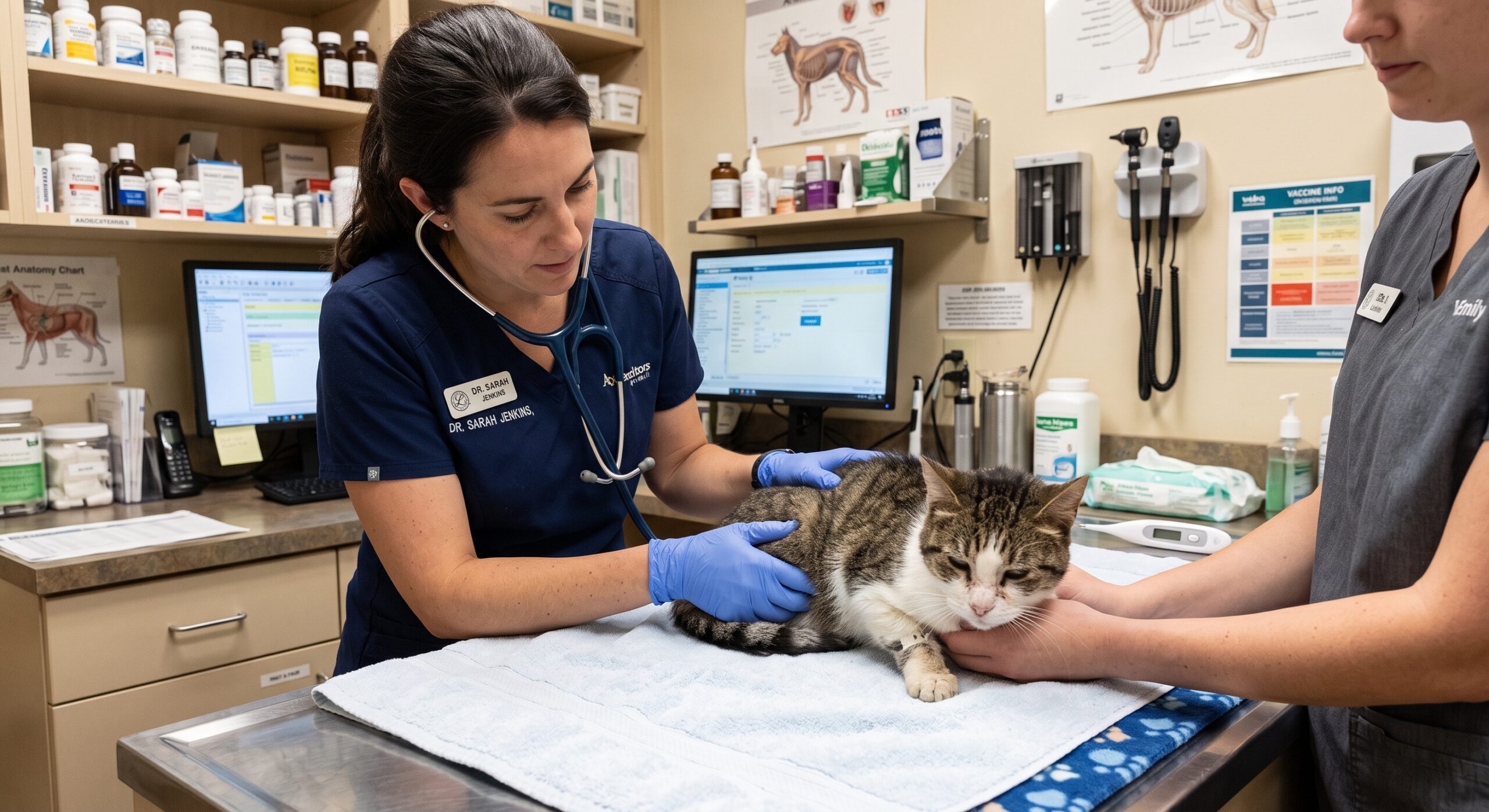
The cat developed an infection on Saturday.
Its owner took it to a veterinary clinic, where it was reportedly admitted and given a bed. By Monday, it had been discharged with antibiotic tablets and a bill of £1,700.
The owner paid £22 a month for pet insurance, according to a Facebook account shared by Carer Manyama. But the immediate problem was no longer the bill. It was getting the cat to swallow its medication.
The solution involved wrapping the animal in a towel, holding it tightly and administering the tablets while it resisted. Then came another worried update: the cat had developed diarrhoea.
To the Zimbabwean listening at work, this was an extraordinary amount of drama surrounding a cat.
“You think you have problems,” the post began, before describing the owner’s running medical updates.
The comments filled quickly with stories from Zimbabweans who had encountered similar situations abroad: dogs having teeth extracted, pets undergoing operations, cats with diabetes, animals attending daycare, dogs receiving specialised meals and owners taking time away from work when a pet became ill.
Some laughed because the level of attention felt excessive. Others laughed because they had once found it strange but now owned insured pets themselves.
A few did not laugh at all.
“If you are not a pet lover, you won’t understand this,” one commenter said.
And that became the real divide in the discussion. Was this an example of people with too much money turning animals into children—or simply a form of care that many Zimbabweans had not been raised to recognise?
The animal Zimbabweans remember
For many Zimbabweans, particularly those raised in rural or working-class homes, an animal traditionally had a clear role.
A dog guarded the property or accompanied people hunting. A cat controlled rats and mice. Cattle represented wealth. Chickens provided eggs or became relish. Animals could be valued and even loved, but they were rarely organised into the emotional centre of the household.
A sick animal might be treated if help was available and the cost made sense. But spending the equivalent of many families’ monthly income on one veterinary admission could feel difficult to comprehend.
That difference produced some of the sharpest humour in the comments. A sick bird in an incubator became potential muriwo wesadza. People joked about funerals for rabbits, cremated dogs and cats receiving more medical attention than some human beings.
Behind the humour was an old hierarchy: people come first, animals come afterwards.
Migration disrupts that hierarchy.
In Britain and other Western countries, many Zimbabweans enter homes and workplaces where pets are not described as useful animals. They are called children, companions or members of the family. Their birthdays are celebrated. Their food is planned. Their medical care is insured. When they die, their ashes may return to the home, and the grief can be treated with the seriousness of a family bereavement.
For someone raised with a very different relationship to animals, the first encounter can feel like theatre.
But for the owner, nothing is being performed.
When the worker is expected to grieve too
Many of the comments came from Zimbabweans working in care, domestic service or private homes.
They recalled arriving at work to find entire households grieving over a dead dog or cat. One worker described being embraced by a crying client before realising that the “family member” who had died was a dog. Another said she spent hours listening to stories and being shown photographs of a deceased cat.
Several described the additional pressure of being expected to display the correct amount of compassion.
One commenter said she was judged because she did not appear sympathetic enough about a dog. Another admitted that she had learned to “play along,” cuddling pets enthusiastically in front of their owners and laughing only when alone.
These are funny workplace stories, but they also describe a genuine form of cultural labour.
A Zimbabwean employee may understand that the employer is upset without emotionally experiencing the death in the same way. Yet professionalism requires a response that respects the owner’s grief.
The worker must quickly translate between two emotional systems.
In one, saying “it was only a dog” may seem factual. In the other, it can sound as cruel as dismissing the death of a relative.
The challenge is not that the worker must pretend the animal is human. It is that they must recognise the human attachment surrounding it.
You do not have to value the pet in the same way to understand that its owner does.
Is £1,700 too much?
The reported bill brought money into the debate.
To some commenters, spending £1,700 on a cat was evidence that Western pet culture had lost all proportion. They imagined what that money could do for a person, a household or relatives in Zimbabwe.
That reaction is especially understandable among migrants who constantly calculate money across borders. A veterinary bill in Britain can immediately become school fees, groceries, medical treatment or building materials when converted into another currency.
The cat is not competing only with its owner’s other expenses. In the Zimbabwean imagination, it may also be competing with unmet human needs thousands of kilometres away.
But this comparison can become unfair.
The owner chose to keep an animal and therefore accepted responsibility for its welfare. Once a pet depends entirely on a household for food, safety and medical care, allowing it to suffer because “it is only an animal” is also a moral decision.
Pet lovers in the discussion described spending heavily when dogs were injured, visiting hospitalised animals and continuing to mourn pets years after they died. One commenter who identified herself as a veterinary professional argued that the way people treat animals can reveal something about their humanity.
Still, loving an animal does not settle every financial question.
There are limits to what any household can afford. Pet owners may have to weigh the cost of treatment against the animal’s age, pain, prognosis and quality of life. Insurance may help, but the post does not establish how much of the £1,700 was eventually covered.
The useful question is therefore not whether a cat is “worth” £1,700 in the abstract. It is what responsibility a person accepts when they choose to bring a dependent animal into their home—and what sacrifices that responsibility can reasonably demand.
Migration can change the migrant too
Among all the laughter, one comment revealed another side of the story: “I started by pretending. Now I am in love.”
That may be the most interesting observation in the entire discussion.
Not every Zimbabwean remains outside pet culture looking in. Some begin by tolerating the employer’s dog, then learn its routines, recognise its moods and eventually adopt an animal of their own. Before long, they too are visiting the vet, buying insurance and requesting time away from work when the pet is ill.
Migration changes more than accents, food and working habits. It can expand the categories through which people understand attachment.
A dog that once belonged outside may begin sleeping in the house. A cat that would once have been valued for catching mice may become a companion through loneliness, divorce, ageing or the isolation of diaspora life.
For migrants living far from extended family, a pet can provide daily affection without demanding remittances, immigration documents or explanations about why they have not visited home.
That does not make the animal a replacement for people. But it may explain why some migrants become deeply attached in ways they never expected.
Compassion does not require identical feelings
The original post worked because the situation was genuinely funny from one cultural perspective. The clinical updates, the towel, the tablets, the insurance and the diarrhoea arrived with the seriousness usually reserved for a sick relative.
Zimbabweans recognised the awkwardness of being drawn into a crisis they did not emotionally classify as a crisis.
But humour becomes less harmless when it treats another person’s attachment as proof that they are foolish or mentally unwell.
Pet owners can also become unreasonable when they demand that every colleague or employee love their animals with equal intensity. An employee should treat a pet humanely and respect a household’s grief. They should not be forced to perform intimacy they do not feel.
The meeting point is respect.
The pet lover can accept that not everyone sees a cat as a child. The non-pet lover can accept that grief is real even when its object would not produce the same grief in them.
Perhaps that is one of migration’s quieter lessons. Living together does not require us to feel everything in the same way.
It requires us to understand that what looks like “just a cat” to one person may be the creature waiting at the door every evening for another.
The vet bill may still make a Zimbabwean gasp. The funeral may still feel unfamiliar. The medical updates may still become a story shared later with laughter.
But when the cat is sick and its owner is frightened, the better question may not be, “How can anyone care this much?”
It may be: what has this animal meant in a life we know very little about?